October 11, 2026
How modern VMS technology, AI-powered insights, and smarter supplier strategies are transforming contingent workforce management.
The way organizations manage their workforce is changing. Yet many companies continue to rely on outdated processes, disconnected systems, and manual workflows to manage one of their most important investments: their people.
As contingent workforce programs become more complex, traditional management approaches are struggling to keep up.
The challenge isn't simply finding talent anymore. It's managing suppliers, controlling costs, maintaining compliance, and making informed decisions in an increasingly unpredictable labor market.
The future of workforce management requires more than visibility. It requires intelligence, control, and adaptability.
Managing a contingent workforce across multiple suppliers, locations, and departments creates significant operational challenges.
Without a centralized strategy, organizations often encounter five common obstacles:
1. Limited Workforce Visibility
When workforce information lives across spreadsheets, emails, and disconnected platforms, gaining an accurate picture of labor spend and supplier performance becomes unnecessarily difficult.
2. Inconsistent Rates and Rising Costs
Without standardized rate structures and clear oversight, organizations risk paying different rates for similar roles across locations or suppliers.
3. Supplier Fragmentation
Managing multiple staffing agencies without a centralized system can lead to inconsistent communication, duplicated efforts, and limited supplier accountability.
4. Compliance Complexity
Tracking certifications, qualifications, insurance, and other requirements manually increases administrative work and the potential for compliance gaps.
5. Inefficient Invoicing and Reporting
Disconnected approval, timekeeping, and invoicing processes can create delays, errors, and unnecessary administrative expenses.
These challenges don't just slow operations. They make it harder for organizations to respond confidently when workforce demands change.


A Vendor Management System (VMS) provides a centralized platform for managing an organization's contingent workforce and staffing suppliers.
Rather than coordinating multiple processes across disconnected tools, businesses can bring critical workforce operations into one environment.
A modern VMS helps organizations:
But technology alone isn't the destination. What matters is how effectively that technology enables better decisions.
For years, workforce management systems have helped organizations collect and organize information.
The next evolution is making that information easier to understand and use.
Artificial intelligence is introducing new opportunities to simplify how organizations interact with workforce data.
Instead of navigating multiple reports, applying filters, and manually interpreting results, users can increasingly interact with information through natural-language questions.
Imagine asking:
This shift from static reporting to accessible insights allows workforce leaders to spend less time searching for information and more time acting on it.
The real value of AI isn't replacing workforce expertise. It's helping people make better decisions with less friction.
While VMS technology provides the foundation, an effective contingent workforce strategy extends beyond software.
Organizations also need the right partners, processes, and supplier relationships.
This is where complementary workforce solutions become increasingly important.
Managed Service Provider (MSP) Programs
An MSP can provide program-level oversight, supplier coordination, process management, and strategic guidance, helping organizations maintain consistency and accountability across their contingent workforce operations.
Supplier Marketplaces
Supplier discovery platforms help organizations identify and evaluate staffing partners based on business needs, geographic coverage, qualifications, and other relevant criteria.
AI-Powered Workforce Intelligence
AI-powered tools can help workforce leaders access information faster, identify patterns, and reduce the effort involved in routine analysis.
Together, these capabilities support a more connected approach to workforce management—one where technology, suppliers, and operational strategies work toward shared business objectives.
At SourceNow, we believe organizations should have greater control over their workforce operations without adding unnecessary complexity.
Our approach combines modern workforce technology with solutions designed to make contingent workforce management more transparent, efficient, and adaptable.
With SourceNow VMS, organizations can centralize supplier management, workforce visibility, compliance workflows, and operational reporting.
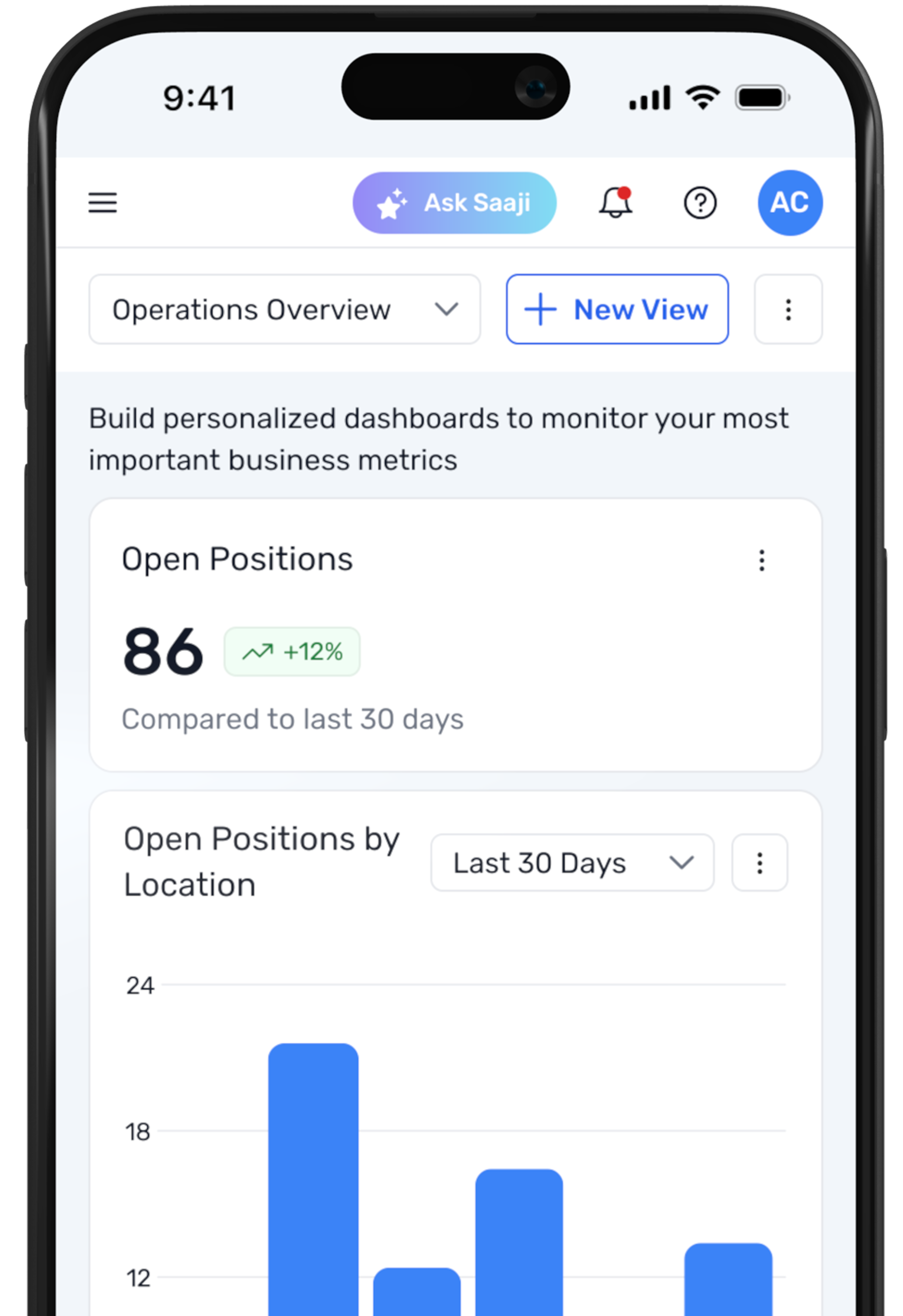
Our AI assistant, Saaji, takes workforce intelligence further by enabling users to ask questions about their VMS data and access relevant insights through a conversational experience.
And through our broader workforce solutions, including managed services and supplier discovery, SourceNow helps organizations connect technology with the people and partners behind their operations.
Our goal is simple: Make workforce management smarter, more accessible, and easier to control.
Workforce uncertainty isn't going away. Labor demands will continue to shift, supplier networks will evolve, and organizations will face increasing pressure to operate efficiently.
The businesses best positioned to navigate those changes will be the ones equipped with better visibility, stronger governance, and more adaptable workforce strategies.
Modernizing workforce management isn't just about replacing outdated tools.
It's about creating an environment where every workforce decision is supported by better information, more consistent processes, and the flexibility to respond to change.
Because the future of workforce management isn't about managing more complexity. It's about making complexity easier to manage.